
Mainard Larkin: Standing For Something
Mainard Larkin: Standing For Something
Mainard Larkin, the Auckland artist previously known as rap artist Randa, has re-emerged in 2026 as a self-aware country artist, embracing the full-on embroidered Western shirt and snake boots kind of American country. ‘Rattlesnake Boy’ is the new album released under his given name, a character-based album infused with the same storytelling instincts that made Randa so compelling. Nur Peach talked with him about the music and the persona.
For several years up to 2020 Mainard Larkin made waves in the NZ indie scene as Randa, (aka Larz Randa), the youthfully energetic rapper who won fans with a colourful strength of vision and vocal softness, quick wit and finger on the pulse of pop culture.
‘You know we get down with all the cyber moms / One of them told me I was hot right now like Tiger Balm / One of them said Larz, you a teen heart throb’, as Randa rapped in 2014 single Rangers.
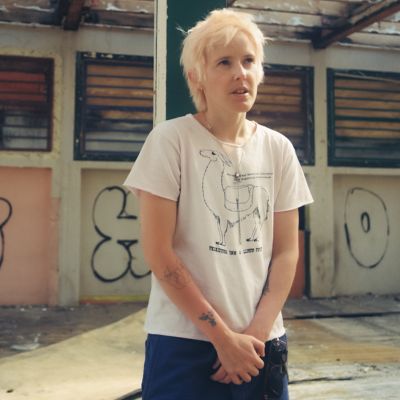 Larkin is the kind of inspired creative spirit you’d expect to do the unexpected, so perhaps his pivot from hip hop into writing country music isn’t too surprising. The artist says the transition wasn’t necessarily a conscious decision.
“Around 2019 I started listening to a lot more country music. I was really obsessed with Orville Peck’s first album and I was like, ‘Man, this is amazing.’ I had never really listened to country music that I felt I connected with.
“Then I started listening to other country artists. I found it interesting how it’s such a storytelling genre, and I felt super attracted to that. Because I think when I was making rap stuff I was trying to tell a story too, but I could also be very irreverent at times with my lyrics.
“Around the Covid lockdown times I went through some stuff that humbled me a little bit, and I was just really sad for a while, and I was writing all this very earnest poetry.”
The catalyst for the album was the slow stompin’, blues-infused Gossip (‘I fell asleep in the moshpit…’). Larkin wrote the song, and the rest of the album, with Shannon Fowler, the award-winning producer better known as Tom Lark.
“He had just made a country album, and we were like, ‘Oh, let’s work on something.’ I had all these poetic lines, and somehow Gossip just happened. I really liked using my voice differently. I was like, ‘Oh, this is such a fun track,’ and it was a fun process too. I really enjoyed working with Shannon, and it was also the first time in my life that I could afford to self-fund an album, so we decided to make a whole album!”
‘Rattlesnake Boy’ was recorded at Fowler’s studio in central Auckland. Larkin contributed lyrics while Fowler took care of the production and instrumentals.
“Shannon’s so talented when it comes to the music so usually I’d let him guide that and direct that. I’d just give him feedback, let him know what I thought or what kind of vibe I wanted. As Shannon was making the music, I would be looking in my diaries or my journals for ideas, and then once we had the skeleton of a song, that’s when we’d start writing lyrics.”
“There’s a really cool track on there called Reno, it’s fully an instrumental. Shannon made that whole track, and it just really represents the tone musically. You can kind of close your eyes when you listen to it, and you can really see the world of the album.”
With ‘Rattlesnake Boy’ released via indie label Lil’ Chief Records, the now 33-year old creative is looking forward to the future. Although we may yet hear more rap music from him, Larkin confides that he probably won’t keep using the Randa moniker.
“I love rap music. I love writing rap bars. I think if I was to make rap stuff, I would probably just create another project for that, because I feel like the Randa era was me as a late teen. I started that when I was 19, and it made sense for me in my 20s, I related to it – but I think I’ve kind of grown out of it now.”
Though hanging up his Randa hat, we should expect no less strength of vision from Larkin going forward. Case in point, ‘Rattlesnake Boy’ is a loose concept album which centres on a fictional Texan pro wrestler of the 1990s. Larkin’s love of televised wrestling inspired him to develop this perplexed character.
“Between the ages of 12 and 18, I was so obsessed, and I still love it. I’ve been storing all of this knowledge in my head for years about pro wrestling and behind the scenes of that world. I’ve read so many autobiographies, some of them ghost-written for the wrestlers, but some of them, like Mick Foley, wrote their own books.
“Country music also makes me fantasize and dream about southwest America. It felt like it was a way to make the album fun, but also, I get to hide behind the character of the wrestler. I like the idea that I’m singing about my own problems, or heartbreak, or my own hopes for the future – but it’s slightly easier to be more vulnerable when I can just say it’s a character.”
Far from a passing songwriter conceit, Larkin has put a lot of thought into the character’s persona and narrative arc.
“I just refer to him as the Rattlesnake Boy. That’s his wrestling name. He’s from Texas, and he grew up with a dream of becoming a professional wrestler, and he achieved his dream. But when many people achieve their dream, it doesn’t necessarily fill the void that sits in their chest. It doesn’t solve all of their problems, and he realises that when he’s on top of the world in the wrestling business, he still has to deal with heartbreak.
“And because he’s a wrestler in the ’90s, he has to deal with his drug addiction, his steroid habits and things like that. He’s wrestling with whether he can be a person that he feels proud of. Asking himself, ‘Do I live the values that I preach?’
“I think we often beat ourselves up and we think that that’s going to help us become better people. But ultimately, when we apply self-compassion, I think that’s when we break through and we can overcome a lot.”
Our protagonist ultimately finds that self-compassion, making for an inspirational journey. The title track’s chorus perfectly encapsulating this message when Larkin sings, ‘the sinner has a future, the saint has a past’.
“This line, for me, is kind of like each day is a new day. It doesn’t mean that everything that you’ve ever done hasn’t happened. But I think it’s important not to dwell on the past, and focus on everything that you can do in the present, not in a way that’s as high stakes.
“I think we should always hold each other accountable, but we shouldn’t judge ourselves and others. We should allow ourselves to dream that we can be the best possible people we are, and maybe for some of us, that doesn’t mean being successful.
“I feel like my life is very simple often. It’s like, go to work, do the nine to five. But at the end of the day, if I’m proud of what I’m giving into the world, then that’s what matters.”