Hiva Folau Vaka: Revitalising Pacific Languages in Song
Hiva Folau Vaka: Revitalising Pacific Languages in Song
Hiva Folau Vaka – Vaka Carrying Music is a legacy project for the Pacific Music Awards Trust, an album of songs developed to highlight and aid the revitalisation of at-risk Pacific languages. The 22-track compilation album was released late November, 2025. Co-project leader Petrina Togi-Sa’ena, MNZM, provided NZ Musician with this overview.
Music is an important way that families, communities and cultures retain their languages – especially when living away from their homelands. Through traditional Pacific songs, we tell our stories, share culture and preserve our history, from one generation to the next.
To honour the 20th anniversary the Pacific Music Awards, the PMA Trust wanted to create a legacy project that would be impactful for our Pacific communities. A dream project that had been in our hearts for a few years was able to be realised with support from NZ On Air, and was timed to honour this milestone anniversary.
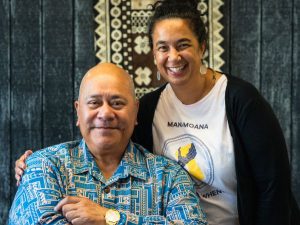 ‘Hiva Folau Vaka – Vaka Carrying Music’ was initiated to support the creation of new songs in Pacific languages, positively contributing to language revitalisation in Aotearoa. Starting with a focus on languages that are the most vulnerable the Trust hoped to create Pacific classics, new songs that can be shared within families and loved across generations. Fonoti Pati Umaga and Petrina Togi-Sa’ena (pictured), led this project on behalf of the Pacific Music Awards Trust.
In developing Hiva Folau Vaka, the Trust wanted to create a collaborative village approach, that was underpinned with Pasifika values. It was important that the artists were fully supported and worked within a collective, rather than working alone. We wanted to have completed recordings, that would be released, which would allow us to share the songs with our communities. We also wanted to capture the experience through photos and documentary content, to further share the stories of the project.
For the development phase, we worked on a pilot song in July 2024, in the languages of te reo Māori and Gagana Samoa. We were very fortunate to bring together an amazing collective of artists; Mana Whenua Samoana, Maisey Rika, Tipene, Kas Tha Feelstyle, Mo Etc, Kenzie from Welly. The song Tala-Noa was written by the collective and produced by Tenei ‘10A’ Kesha. The debut live performance of Tala-Noa opened the 20th Pacific Music Awards ceremony.
Following the pilot we planned three gatherings; in Auckland at Big Pop Studios and Wellington at Massey University’s Ahumairangi Studio, between December 2024 and May 2025.
Research resources included the Ministry for Pacific Peoples’ Pacific Languages Strategy 2022-2032, which identified that the use of Pacific languages is in decline, and some are in urgent need of revitalisation. It was decided that for the first phase of Hiva Folau Vaka, we would focus on the realm nations and the languages of Te Gagana Tokelau, Vagahau Niue and te reo Māori Kuki ‘Airani.
All three languages have been identified by UNESCO as endangered, vulnerable and needing revitalisation. The communities for the realm nations are significant, with the populations of each nation now larger in Aotearoa than in the island nations. The state of these languages was a huge reality check. With this knowledge, the level of responsibility and motivation for the project significantly increased.
An open call was made for artists to participate, with the goal to write and record at least one song in the Pacific language(s) of their choice. Through their applications artists explained their reasons for wanting to be involved. They shared how rare it was to have an opportunity to write in these three languages, that it was something they have wanted to do, but didn’t have the support to achieve.
There were personal stories of loss and disconnection from their heritage. There was also embarrassment and shame stemming from other people’s judgement for not knowing their language. Some were singing songs in other languages, but not their own. We had artists who were very immersed in their culture and others who were completely disconnected.
There were a few artists whose grandparents were the ones who had taught them songs, shared their knowledge, and encouraged them to speak their languages. It was these artists who are now bringing back their language to the family, and are reconnecting with their grandparents and parents through their music.
The artists’ stories helped us curate the gatherings and also affirmed the Pasifika collective village approach. We are so grateful for the artists for the project; Eseta, Fredwyn, Heiressofthegame, Jasmine Leota and Isitolo Alesana, Jere Snohh, Kitoria and Nayeza, Liana, Lio Soul, LJ Unuia, Malekeline, Mana Whenua Samoana, Rosetta Lopa and Nate Lopa, Tarani Takai, The Tuloto Band, Tilly and Sagita Lesa, Vitinia and Vox Dawn.
We then developed the collective village that would support the artists, which included experienced producers, knowledge holders, quality recording studios and facilities, and the PMA team. We were blessed to confirm each person and space to work within. The gatherings were for three days, with three studios operating simultaneously – each producer working with two artists. Everyone involved embarked on a metaphorical vaka, taking on the challenge to write and record new songs in the time provided.
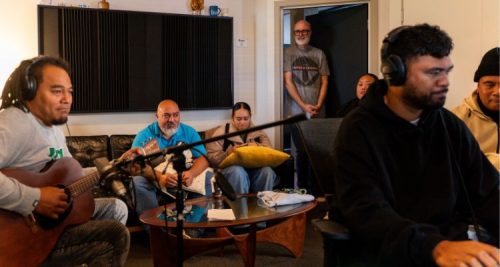 The producers played an important role, working with and guiding our artists to support their songwriting and recording process. They were selected for their experience and expertise, which was invaluable to the artists and directly ensured the songs were completed. We were fortunate to work with respected producers Christian Mausia, David Atai, Vince Harder, Tenei ‘10A’ Kesha, NOÉ | Seru Tuivoavoa and Trek One | Lance Wairau-Laga.
We partnered with the Centre for Pacific Languages who provided the knowledge holders, each being language experts who also had a love of music. They provided a critical role for each gathering and our knowledge holders were Linda Zoll, Selina Patia, Molima Molly Pihigia QSM, Mal Lakatani, Kelekolio Perez, Penehe Tulafono, and Siniva Foua.
They worked with each artist as they wrote their lyrics and helped with pronunciation when they were recording. To do this in real time, was such an impactful process and provided a safe space for the artists.
Pati and Petrina had developed a methodology that was unique to Hiva Folau Vaka. To begin each gathering, Pati would lead the group through a Pacific framework similar to Maori whakawhanaungatanga, to safely and warmly welcome everyone into the space, to embrace each person physically and spiritually, establishing trust amongst all the participants.
Pati reminded them to connect to their ancestors, to represent their families and that our Pacific ancestry is aligning through the shared creative energy. We would open and close each day with karakia and a collective circle, also having shared meals and time together between the studio sessions. Support was also provided by cultural advisers and family who would add their own expertise and cultural context to stories and narratives of the Pacific cultures represented.
The village approach and collective space allowed knowledge to be shared and enhanced the collaborative process. The producers could consult with each other and assist with tech details. The artists were able to join other recording sessions on instruments or backing vocals – everyone was able to support and collaborate with each other. It was a beautiful open process.
The songs created through Hiva Folau Vaka share personal stories from each artist. They are a fusion of traditional and contemporary styles. The artists shared their experience of their Pacific identity in Aotearoa, and a strong desire to connect back to their homeland and heritage. For many it was their first experience writing and performing in their own languages.
The majority of the songs were original, with a couple of artists bringing in songs written by their grandfathers. Both artists honoured these songs, adding new lyrics. Two others shared the stories of their grandmothers, one telling the story of her grandmother’s journey to Aotearoa on the Tofua. Another shared the very emotional journey of her grandmother’s dementia, and how through talking Niuean and singing songs they were able to connect and meet each other again.
Revitalising languages is a collective responsibility and requires a collective approach. The Hiva Folau Vaka project is the PMA’s contribution to this movement. The power of the collective was realised through Hiva Folau Vaka. United as a family, the village of artists, producers and knowledge holders all came together with the common purpose to honour these languages and contribute to their revitalisation.
We celebrate the incredible songs they created with the compilation album ‘Hiva Folau Vaka’.
- 2025 pacific music awards
- ahumairangi studio
- big pop studios
- christian mausia
- compilation album
- david atai
- fonoti pati umaga
- hiva folau vaka
- kas tha feelstyle
- kenzie from welly
- lance wairau-laga
- maisey rika
- mo etc
- pacific music awards trust
- pacifica
- petrina togi-sa'ena
- seru tuivoavoa
- tenei kesha
- vince harder
- vox dawn