
Made in NZ: Lujin MIDI Controller
Made in NZ: Lujin MIDI Controller
Based in Christchurch, Midifex is the small company behind the recently launched Lujin, a premium quality MIDI controller that is finding a home on the recording desks of orchestral, cinematic and gaming composers across the globe. Designed and manufactured locally, Lujin units are hand assembled, with retro elegance hiding clever electronic touches like the LED lighting under the faders providing visual feedback of the digital recording on playback.
“It sounded like a musical instrument, and like an illusion, rather than whether it be a mandolin or a ukulele,” Oliver Huggins explains of the made-up name given to the elegant and electronically sophisticated Lujin MIDI Controller, that he and fellow Ōtautahi composer/tech whizz Jason Long (AvonSynth) developed and are now shipping globally.
Designed specifically for cinematic and orchestral composers, the Lujin is gaining international recognition as a premium controller for integrating dynamics and expression into orchestral sample libraries. Winning praise for its build quality and intuitive controls, the unit’s handcrafted design combines modern functionality with a vintage analog look. The wooden sides and dark steel top intentionally mimic the aesthetics of classic early synths.
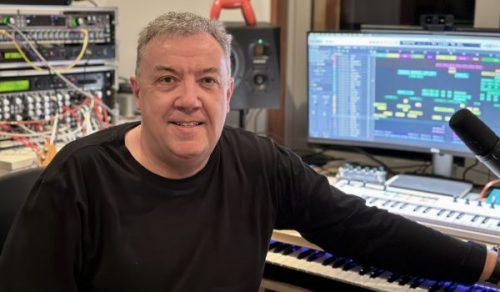 “We wanted to create a tool that was as beautiful as it was functional,” explains Huggins, founder of the manufacturing brand Midifex. “A MIDI controller is always within reach on the desk, so we wanted the Lujin to look great, and to be something any digital composer would find pleasurable to use.”
After close to a year of design and prototyping the Lujin was launched in October 2024, promotion initially reliant on word of mouth through composers’ community Facebook groups and the like. Early trade was okay, but as a premium quality option the price isn’t low, with the punishing global shipping costs needing to be included.
Enter prolific English composer Christian Henson, who was himself founder of the rather successful synth library-specialist British company Spitfire Audio. Henson subsequently established The Crow Hill Company in Scotland, becoming a prolific YouTuber and major influencer in the digital composition scene. Midifex sent a Lujin unit to Edinburgh for his consideration.
Henson is entertainingly opinionated, but in what the Midifex PR describes as ‘a now-infamous review’, he pretty much slammed the newcomer unit, making some inaccurate claims including the erroneous suggestion that it had issues with settings retention and really needed a battery.
That video quickly gained viewership, and notoriety, with numerous owners correcting the misinformation and defending the Kiwi controller. His review sparked widespread discussion and the exposure proved a huge aid in raising awareness of the Lujin. Orders began flowing in. The PR also acknowledges considerable gratitude to him, saying Henson’s reach to the worldwide composer community has been invaluable.
“I was a bit nervous,” Huggins admits with a grin. “We contacted his team and said, ‘Can we send one over?’ then didn’t hear anything for months. All of a sudden this video came out of nowhere. My heart was sinking as I watched, but I think we got something like 25 orders on the first day it came out – simply based on him rubbishing it! And yeah, he later released an apology.
“Probably the nicest thing is that he actually still uses it on his desk. So every time they do these top down videos you see him using the Lujin. And every time one of his videos comes out we get more orders.”
With the first two production runs snapped up by international customers, Midifex are in the happy position of struggling to meet demand, and have already reached a point of profitability, well within the first year of production. The Swedish composer for the Candy Crush video games is one customer he notes talking with, and they’re now keen to get some units into the hands of Kiwi composers.
Reluctantly describing himself as semi-retired, Huggins returned to music as a creative pastime following a successful business career. A keyboard player (unsurprisingly), he had enjoyed a few years on the Christchurch band circuit back in the late 1980s before travelling overseas. Returning to the city he started a tech software company that, as he describes it, was an overnight success… over 25 years.
“Absolutely nothing to do with music! I sold that a few years ago, and we did well from it, which was really great. It’s been merged into a US company now and still doing well.
“But I kind of got back to my roots of music and composing, and 25 years later you could do with gear what you just dreamed about in the ‘80s! I used to have an Atari computer on stage in 1990, with my Roland D-50 synthesizer! And then, all of a sudden 25 years later, it was just a dream.
“So yeah, it’s been great over the last four or five years, including putting together a little studio that others can make use of. It’s more of a passion than a hobby, but a good thing, and it’s opened up a lot of networking of older musicians down here in Canterbury.”
The Midifex/Lujin story started with Huggins trying unsuccessfully to buy a MIDI controller from a similarly small manufacturer in France for his own use.
“I couldn’t get hold of one, he never had any available. Being a software person the idea of actually building a product and manufacturing was a bit new to me, so I decided to work with an engineer here locally. Jason Long is a really interesting guy, he’s a blooming genius actually. He’s got the basis of being a musician and composer, plus he’s a technical engineer as well. So, he did the CAD and the circuit board designs, and the software programming. I’m more concept and commercial, and it works really well.
“We designed a prototype and built one – which was either going to be a very expensive box for me – or something else! Then we decided to do a 50-unit production run, yeah, and I didn’t think we’d sell many.”
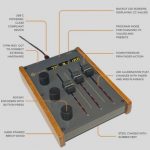 He doesn’t mind being asked if the world really needs another MIDI controller, particularly one priced up around US$250.
“Ahh, well, it needs a good one! Some of the MIDI controllers that are available have very short faders. And if you think about faders as being a way of expression, the longer the fader, the more expressive you can be. And how smooth that is, and how it actually writes the data back into your computer, and those sorts of things.
“I wanted something that people would really like, and they do like it, which has been great.”