Karl Steven: Creating the Pike River film soundtrack
Karl Steven: Creating the Pike River film soundtrack
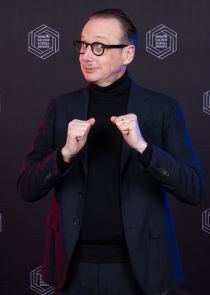
Karl Sölve Steven will need little introduction to most NZM readers. Energised frontman of Supergroove in the late 1990s (and again since the band reformed a decade after), Steven went on to make music with other acts including The Drab Doo-Riffs and Heart Attack Alley. Along the way he completed a PhD in ancient Greek and Roman philosophy at Trinity College, Cambridge, before returning to Aotearoa to pursue a new more solo musical focus as screen composer.
As composer Karl Steven has recorded an unprecedented seven wins in the APRA NZ Screen Music Awards since 2016, including the double (film score as well as TV series score) in 2024. He composed and in a large part created the soundtrack to the recently released Rob Sarkies’ film Pike River, which provided NZM with the opportunity to discuss his work in the context of that highly acclaimed, deeply NZ production. We talked on the morning after the 2025 Silver Scroll Awards were staged, an occasion that his screen accomplishments are recently celebrated on an almost annual basis, 2022 and 2025 being exceptions.
Did you miss making your annual appearance at the Silver Scroll event last night?
 Well, the year before at the Silver Scrolls was a bit full on in terms of the amount of nominations and things for me, it was starting to make me feel kind of uncomfortable… It’s obviously an honour, totally, and I very much believe in every project and every collaboration, but I just felt like, ‘Shit, I’m taking up a lot of space here.’
So it was actually really nice this year – even though, Bookworm was submitted, and I’m very, very proud of that score – it was great to see some other people winning and getting that experience. And I enjoyed having a night off, or like, a year off! Because it’s normally such a big part of my year, and I look forward to it a lot. But there is pressure involved and, you know, I’m not a hugely social person, so it was nice to just have that break!
Your home and studio is in Thames on the Coromandel – not exactly remote but it is rather isolated. Is that in some ways advantageous for your compositional work?
Yeah! I never would have predicted that I’d be a small town person, having grown up like right in the city. But turns out it really works well for my sort of creative process, and lifestyle really. I’ve been travelling quite a lot with work over the past few years, and it’s great to return home to somewhere where you can really focus on the craft, without distractions.
Isolation is something I really value, weirdly. And that’s something I like about film work too, it’s this combination of teamwork and collaboration – and then isolation. I find having that back and forth really positive, because I can have my headspace, and I can be down here and just like buzzing out, which I think is what my job is really.
I have to sort of catch a vibe, and buzz out in that… and generate something that’s going to create that vibe for other people. Finding it can be quite a difficult process. It can need a lot of experimentation – and the isolation really helps for that, because you can just go into your head really, and just disappear.
But then I really like having the sort of parameters set by a team of people who have their own visions, and a story that has its own arc, and characters and a world – because I think it wouldn’t be that great for me to just be in my head the whole time!
How many score creating projects, whether film or TV series, can you cope with over a year?
I have done up to about five in a year – but those years are insane!
It took me so long to get to the point where I was starting to get trusted with some really special projects, so if it’s a good project I just try and find a way to say ‘yes’ to it. Like I’m not here to say ‘no’ to amazing projects, after having sort of dragged myself to this point over 20+ years!
I seriously think it takes about 10 years before anyone’s going to trust you with their baby – because that’s what it really is. It’s their project. They’ve struggled to get it funded. They’ve struggled to go through the notes process… They want to give it to a musician they can trust is going to honour the work, and also honour them and their intentions, and isn’t going to be like, ‘Ahh, here’s the music I like, this is what you’re getting from me.’
You really do have to sort of lay aside a lot of that artistic ego, and just honour the work and the collaborators, and have a genuine dialogue, which at times is quite tough.
What period of time did you spend developing the Pike River score?
Well, that was a fast turnaround one! Basically it was already cut, and temped with placeholder music before I even got a phone call about it. So we had like six weeks to go from zero to a million, and get everything made and approved. It was fast. Then there was a couple of weeks extra towards the back end, but everything just had to be kind of substantially up and running musically.
So it was really hitting the ground running. I feel kind of amazed actually, looking back, that I managed to score that film and put up some really strong work. And I don’t know how I did it, because there was no time to question myself, or even reflect on what I was able to do. I just had to do it.
That was my first time working with Rob Sarkies, the director. He just demands such a high level of excellence, and that’s really intimidating. But it’s also really positive, because he’ll push you to do better work because he just wants the best thing for his film that he’s able to get.
How explicit, or otherwise, was the audio brief you were given?
It was pretty explicit. And there was some fantastic music that it was being used as placeholders, like, you know, your (Gustavo) Santaolalla’s and Max Richter’s and Ludavico Einaudi… just all the great contemporary film people. So the aspirations were already set very high, and that was very challenging too.
You’re given these scenes that have got music, and you need to follow that mood, or that theme or something… But then you also have to depart from that temp music – doing the same thing but like a shitty version, that’s absolutely not okay. So you have to look at what is it that’s great about this placeholder music? Why are they using it? Why is it achieving the storytelling goals?
And you also have to ask what’s wrong about it. What’s not working? Why is it not our story, our film, our characters with this in there? So there’s the two considerations, but that definitely narrows the goal posts quite a lot.
Then you have to find a way to create this arc. Because really what they’ve given you as a template is a patchwork quilt. It’s like a bit of this here, bit of that there – and you have to make it into something that makes sense as a single journey.
And in the case of Pike River, the story is moving from miners and builders and workers, through to courtrooms, to the Beehive, to people in houses, buses and caravans… It really covers a lot of ground emotionally and also just in terms of place, and sense of the mood of these places.
So the music has to sort of have enough flex in it to speak to all those environments and feelings. So that was a real challenge, but a really great challenge.
Do you recall your own emotional reaction on first watching a pre-cut of the Pike River film?
Yeah. I thought it was amazing!
I steel myself whenever I watch a rough cut to be like, ‘Okay, it’s not finished. It might not be that good, but it can get good by the end of it…’ With Pike River, it was just like, ‘Oh, wow, well, that’s amazing.’
It’s moving. I laughed, I cried, you know? It was just all baked in there, and the performances by the actors are just astonishing.
And how Rob has sort of found a story of hope, inside a story of such an enormous tragedy and subsequent betrayal is… just kind of mind blowing for me. And that was right there right from the first viewing of the unfinished cut. So I think that helped me to just leap in and start making stuff. Yeah, it was just so good.
The film PR includes this quote from you: ‘To my surprise, I found the very old story of Orpheus and Eurydice a helpful touchstone for this because it’s been retold so many times in so many different ways as an exploration of loss, grief, and the attempt to bring back what is lost and find resolution in some way.’
Yeah, it was like that. When I did my PhD it was within the classics faculty at Cambridge, so it was like, ‘Ahh, my kind of ancient philosophy and classics study fits into this!’
As I said before, my job is kind of buzzing out and catching a vibe, and sometimes the names of the pieces that I’m working on can be like a street light in the darkness somehow. Because really it is all darkness at the start, you’re just sort of feeling it out.
So I started using the names of some of the rivers that in ancient Greek mythology they have in the underworld, like Archeron and Styx, and Phlegethon. Just because the words have this sort of power to them.
I would save my session as that, and feel like, ‘Okay, that gives me something to reach towards.’ And the further I got into it, it was like, ‘Oh, and this is like Eurydice disappearing into the underworld. And this is like Orpheus having to go find her, and you know, not turn around on the way back.’
It was very much just a sort of a vibe catcher. I was pretty self-conscious actually when I started sending up cues with those names, because things that are evocative are also often quite pretentious!
Do you break the score composition process down into stages, then establish a schedule?
It’s different for each project. Basically, the way I approach it is that you always have to be doing something, so do the thing you feel like doing at the time. That might be some technical, fiddly thing – or some super creative buzzed out thing, like just literally listening really close to the end of a cymbal ringing out and going, ‘Oh, wow, what are those overtones there?’ Or it might be writing sheet music, which I also did a lot of. You just have to do all of it.
With Pike River I just had to, like go… so it was everything almost at once! I was recording bits of metal ringing in the studio and creating soundscapes out of that. And I was booking the studio and going straight in with David Ward, a great banjo player, and Nigel Gavin who is an amazing mandolin player, to record a bunch of stuff – most of which didn’t actually get used.
I also ordered a cello banjo from America that arrived, so learning how to play it and trying to decide whether that was the right sound for the film. And then discovering, ‘Wow, yeah, it really is great!’
Pike River was a very fertile ground for that kind of process, because there’s pieces of music with the folk instruments, the charango and the nyckelharpa, and the cello banjo. And then other pieces that are just straight piano written out for a pianist, and strings played by the Stroma Ensemble, who are all members of the NZSO, conducted by Hamish McKeich. And then there’s like, super droning guitars with ebow, and re-pitched weird elements.
In that sense, it worked quite well with my very eclectic skill set, and that meant that I could always be doing something.
It does seem quite a lot of what audiences hear is your own acoustic performance, and recordings done in your own studio. Is that typical?
It is normal. But I’m always surprised by it too, because I always think, ‘I can’t play these instruments, I’ll go into a flash studio and get some great players to do it.’
Sometimes what I find is that the wobblier playing, and the more sense of intimacy I can get out of recording myself playing here, actually there’s a positive from that. And so sometimes when I A/B the real player versus me, I end up using me!
In the case of Pike River, Rob didn’t like some of the pieces I made with the real competent musicians, and I was a bit dismayed at that initially. There were other things that he loved, but some just didn’t speak to him – really because of what I’d written, not because of how they had been played.
Because of time pressure I was just forced to do it myself. There was one cue that needed to have a charangbo solo. I can’t play a solo on a charango but it was like, ‘Well, I’m just gonna have to do my best’. So I hit record and did it!
In that situation you just can’t second guess anything, and you just have to give it your best shot. So yeah, at times I really surprised myself. And I’m also surprised I can get really good sounds from in here, better than from a great studio sometimes.
I don’t know why that is, but yeah, you just have to sort of be honest with what you’re hearing, and go, ‘No, that sound has more emotion to it than the sound that I spent all those hundreds of dollars getting.
Are there certain sounds or moods that you struggle with?
Sure, there are some that I find more difficult. Comedy is something I absolutely have done and can do, but I find it so difficult – and I don’t especially enjoy it is the truth. I mean, if it’s a really dark comedy, then I do enjoy it. But 800 Words, the sort of Australian blue sky drama that was shot here, that was an amazing discipline. I did 40 episodes of that, and it was really light and it was emotional, and it was humour and stuff, and it really helped me hone my craft precisely, because it’s just so not my jam.
The projects that I’m really good at, I think, and that I find natural to work on, is stuff which is really high stakes. So stories where people are going through some really heavy things and, you know, there’s danger involved and there’s agony involved. I don’t know why but I just feel like that’s a language that I can speak musically.
It’s always experimental going into that darkness as well, and I feel that that sits quite well with my workflow and approach to music making. It is very experimental. I’m not like, ‘So what notes should my melody be?’ With every project I don’t even know the approach I’m going to take, or the instruments, or will there be notes? So I throw out the rule book every single time. And that probably lends itself to a certain kind of story, which maybe isn’t just a bubbly, light-hearted thing
It’s a mysterious process I think, making music. And that’s why one has to be just so open to anything. There are no rules, you know? Not even with things that we take for granted, like notes and the grid and all those sorts of things. It’s like, well, those are just tools in helping us make our sound art and tell our stories. So don’t let them dictate what you should do.